
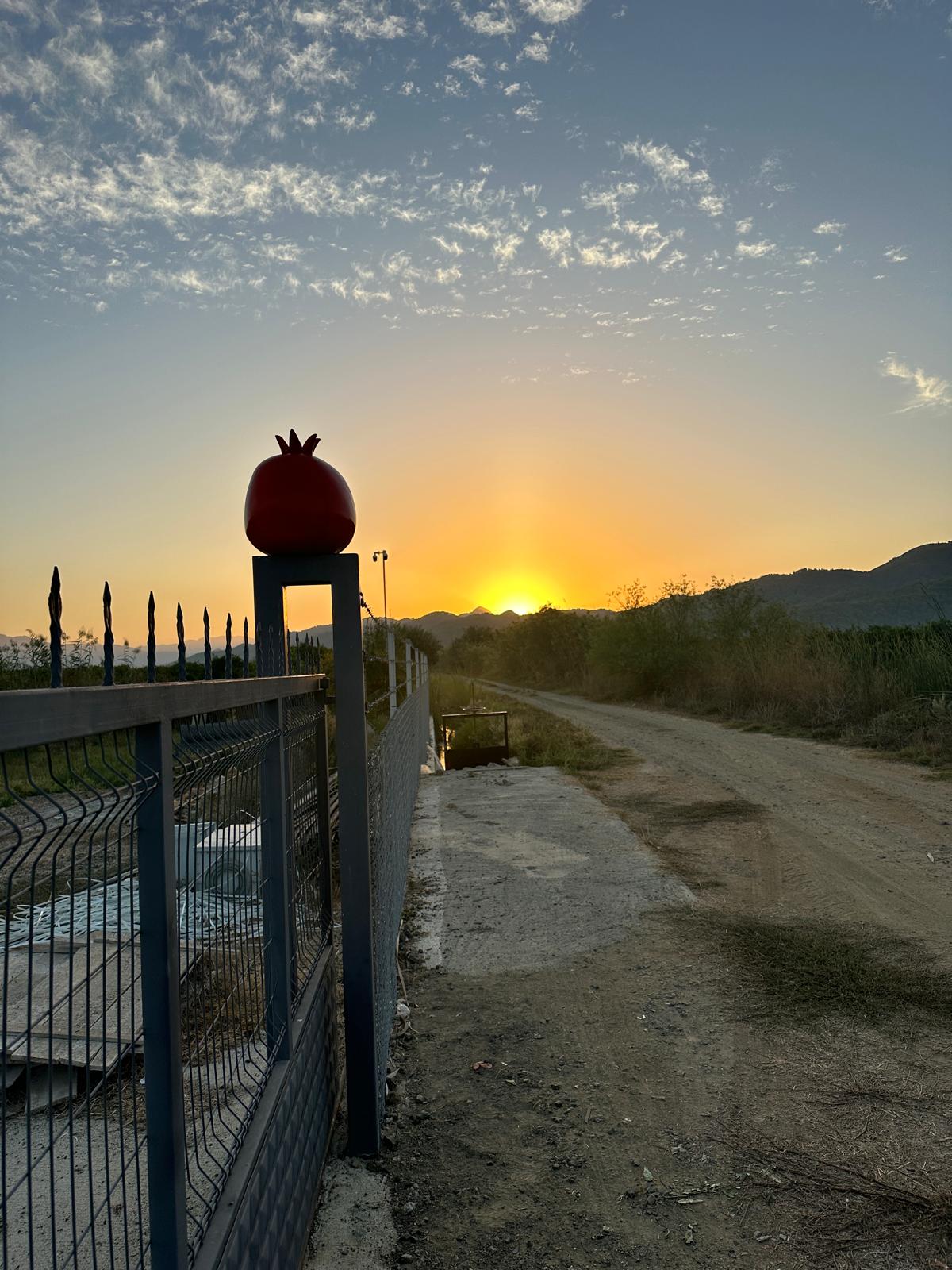
Our Production
From Orchard to Bottle
The time between leaving the branch and entering the bottle is the single biggest variable in how a juice tastes.
What decides the taste of a pomegranate juice is not the recipe but the timing. The fruit starts to deteriorate the moment it leaves the branch, and every hour before pressing takes something from the aroma. Industry solves this with heat treatment and concentrate — we solve it by shortening the distance.
The orchard, the press line and the filling hall sit on the same land. Fruit picked in the morning is pressed and bottled the same day, with no warehouse, no lorry and no waiting in between. Below are the five steps of that route, in order.
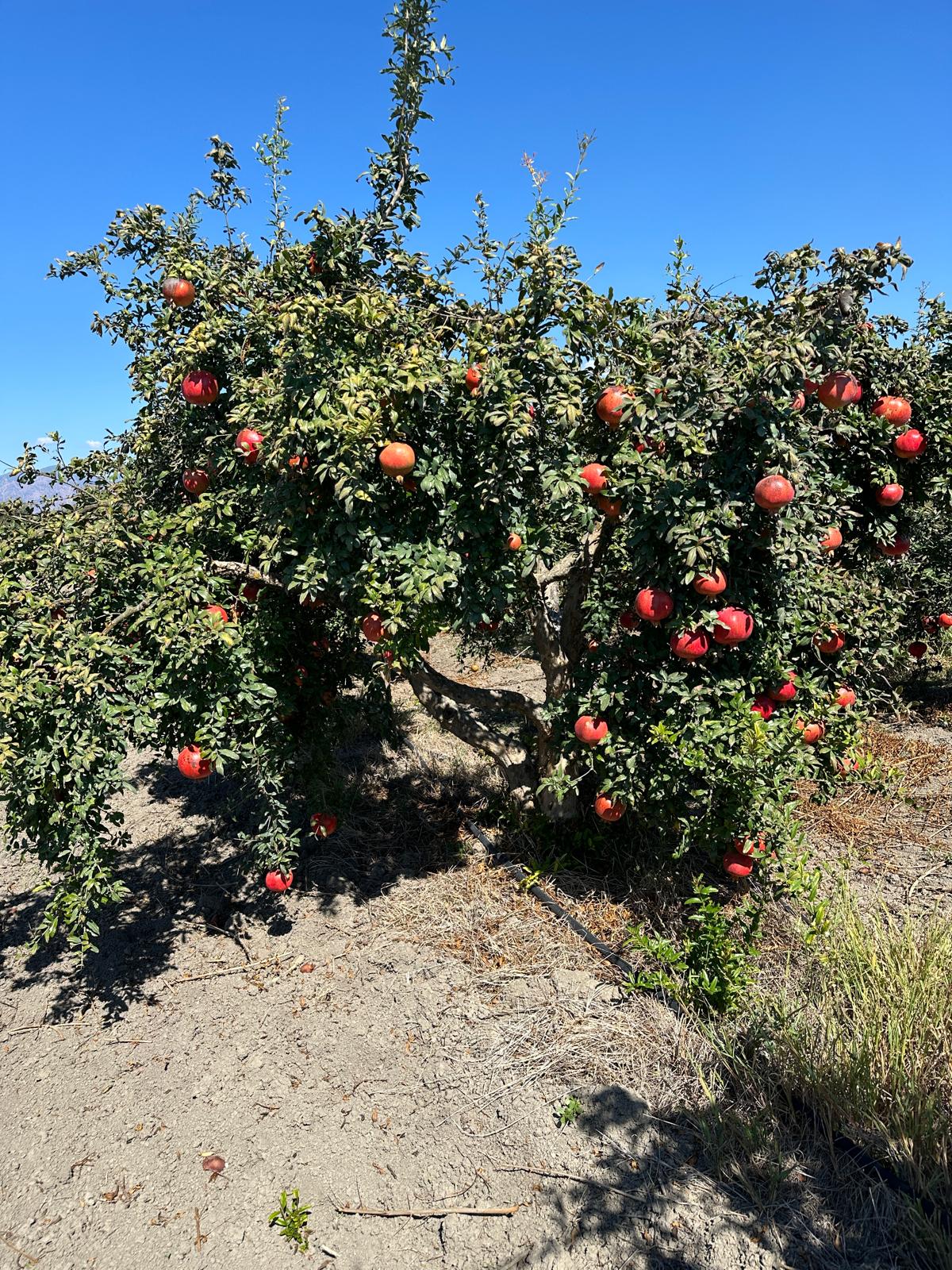
Our Orchards
A pomegranate tree asks for patience. Years pass between planting and the first real harvest. Our orchards run on drip irrigation, and the manure comes from our own animals. No synthetic fertiliser, no chemical pesticide.
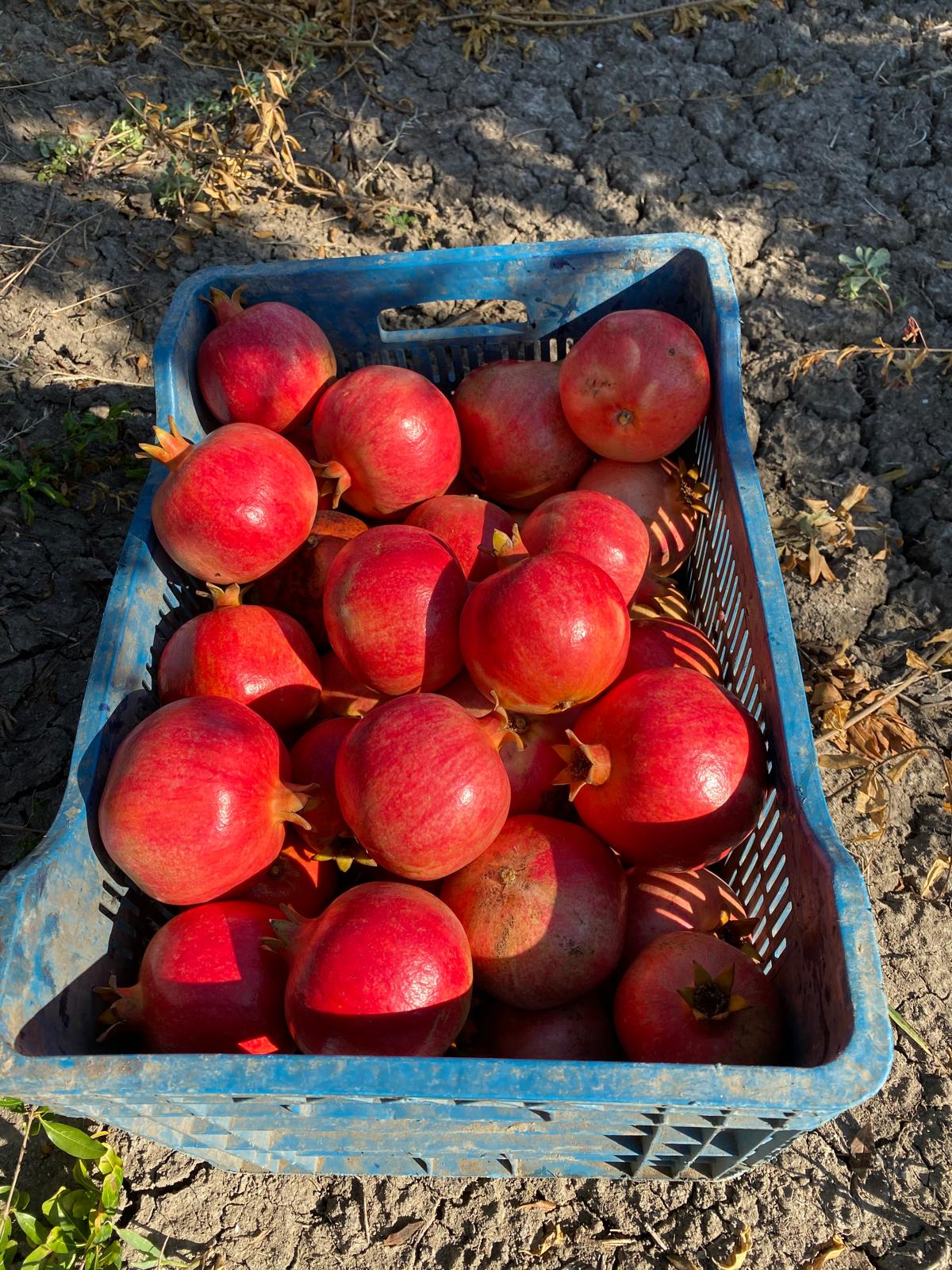
Harvest
Harvest starts with ripeness, not with the calendar. We pick each fruit by hand; machine harvesting bruises the skin, and bruised fruit loses both taste and shelf life. What is picked reaches the facility the same day.
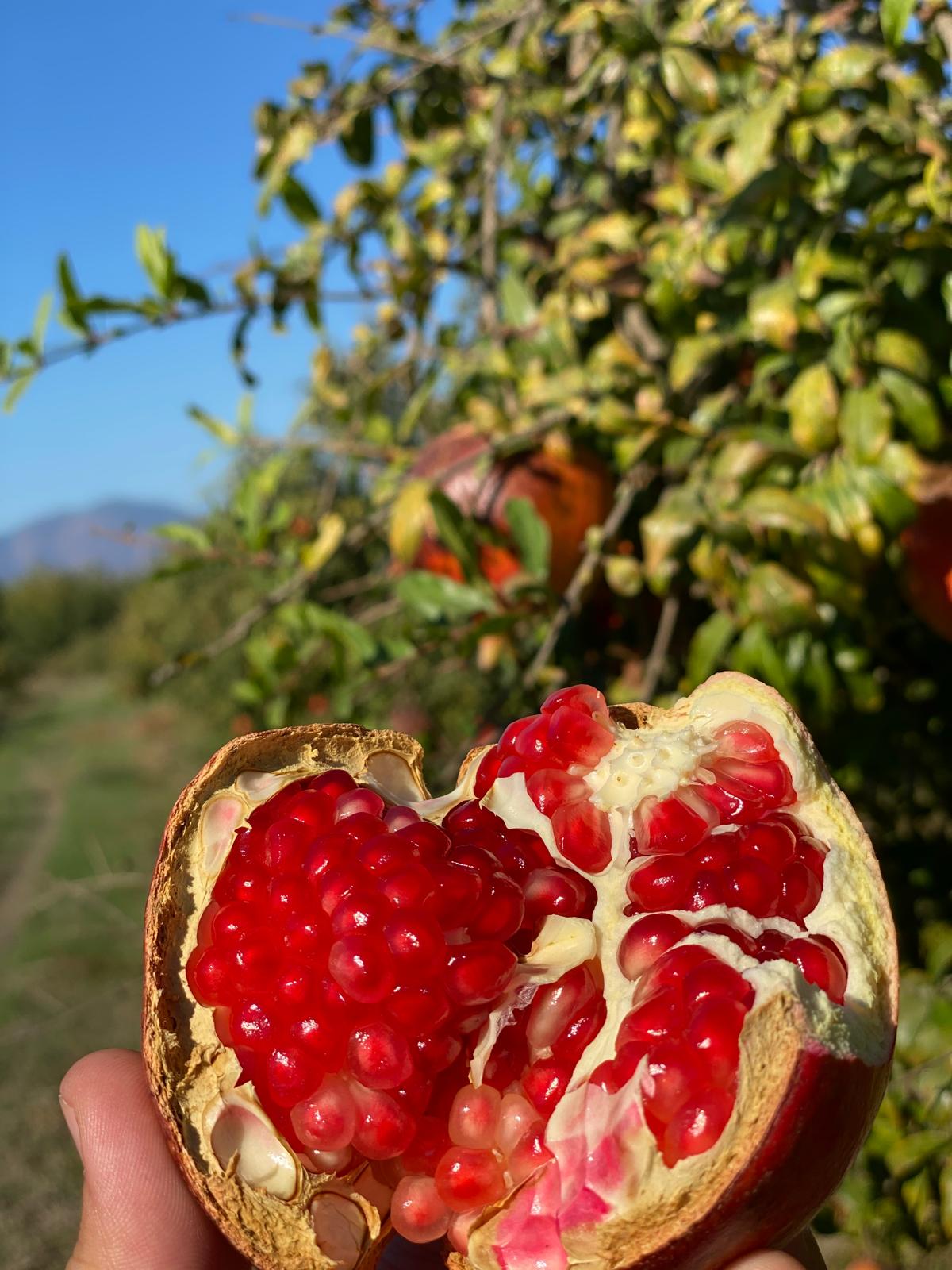
Cold Pressing
We press the fruit cold. Because no heat is applied, the aroma, colour and nutritional value stay as they were. No sugar, no concentrate, no preservative is added — the only thing that goes into the bottle is pomegranate juice.
Bottling
We fill sterilised glass bottles. Glass transfers nothing to its contents and does not alter the taste. Our caps are BPA free. Bottling happens immediately after pressing, in the same facility.
Quality Control
Samples are taken and analysed from every batch. Sugar content, acidity and microbiological values are recorded, and every bottle can be traced back to its batch. A final check is made before the goods leave for shipping.